Services / Right-of-Way Clearing
Right-of-Way Clearing in Warner Robins, GA
When brush closes in on a fence line, a property boundary becomes hard to follow, or an old hunting lane disappears into the woods, you may not need to clear the surrounding acreage. You need a usable corridor.
- Owner-Operated
- Free On-Site Estimates
- Written Pricing
- Start Date in Writing
- Serving Middle Georgia
B&C Mulching LLC offers right-of-way clearing in Warner Robins and across Middle Georgia using a tracked forestry mulcher to cut suitable growth along defined routes.
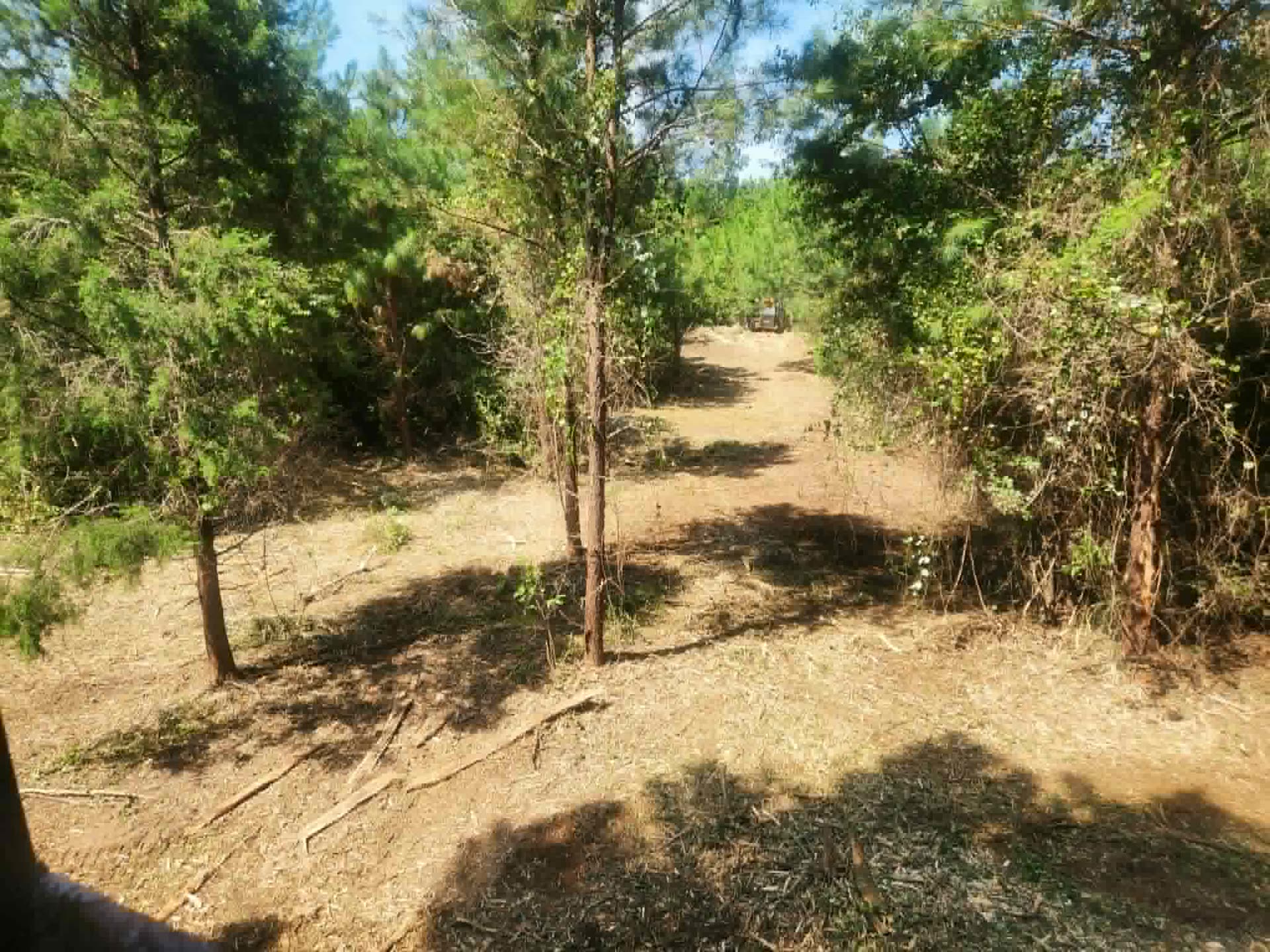
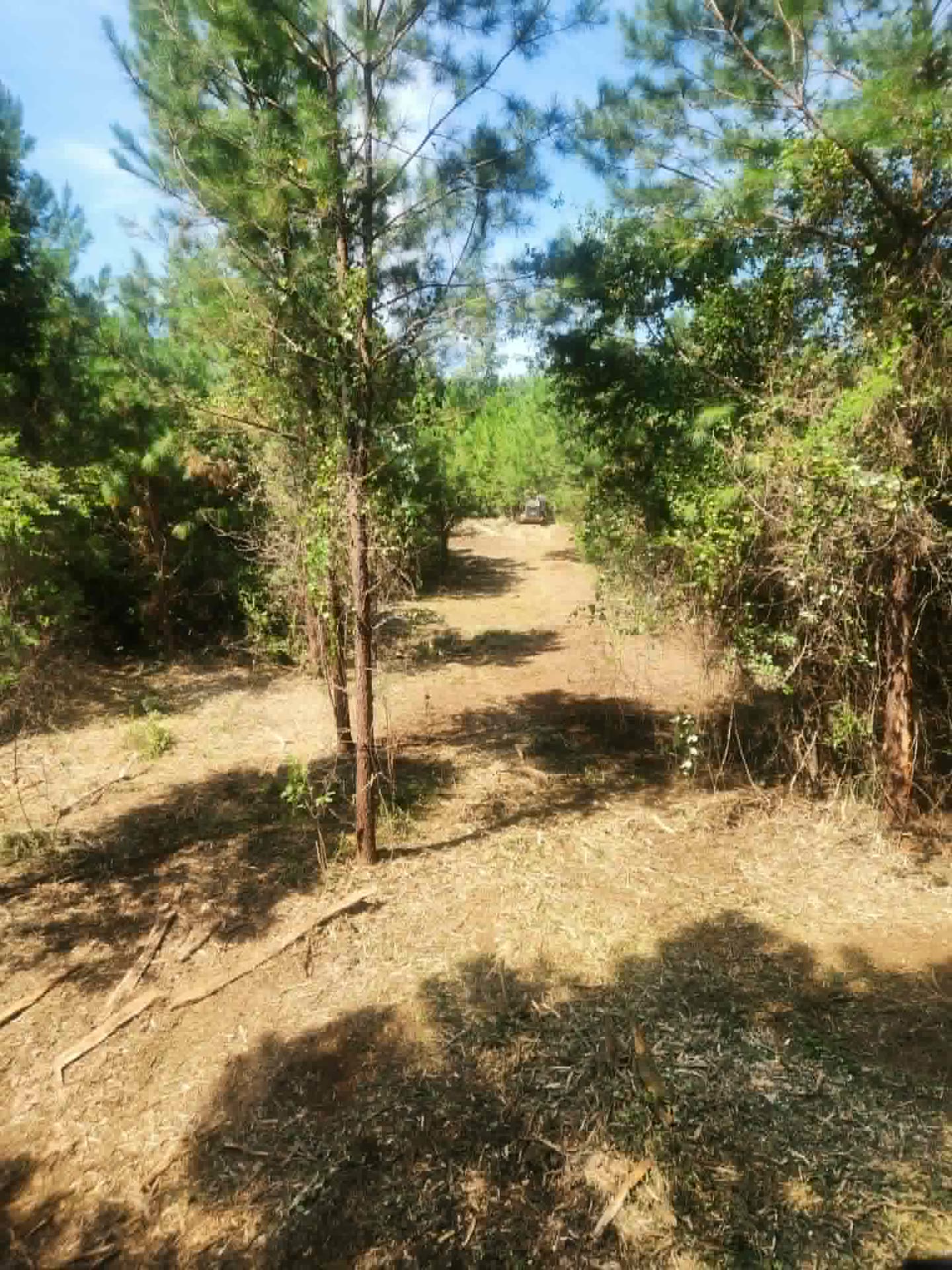
B&C Mulching clears fence lines, property boundaries, and hunting or equipment access lanes. The machine grinds brush and smaller trees into chips where they stand, so the work generally does not leave rows of brush piled along the corridor. B&C Mulching provides a free on-site walk-through, a written price, and a start date in writing.
What Right-of-Way Clearing Means on Your Property
A clearing corridor is a strip of ground kept open for a particular purpose. On private property, that may mean being able to see a boundary, reach a hunting area, or travel along a lane that vegetation has narrowed. The objective is not necessarily to clear everything on both sides. It is to reopen the agreed route while leaving nearby trees and vegetation outside the work area.
Common Reasons Landowners Need a Corridor Cleared
Fence Lines Hidden by Brush
Vines, briars, saplings, and woody growth can make an existing fence hard to inspect or reach. Clearing the vegetation around the line can give a landowner a better view of posts, wire, and ground conditions. Let us know about any wire or other material hidden in the growth before the machine approaches.
Property Boundaries That Are Hard to Follow
When undergrowth blocks a route between known points, a cleared corridor can make it easier to move along the property edge. Mulching does not establish a legal boundary. Customers should have the intended line identified before clearing begins, rather than expecting the operator to determine where the property ends.
Hunting and Equipment Access Lanes
Landowners may need a way through brush to reach hunting ground or travel between parts of a tract. Mulching can open a suitable vegetated lane without turning it into a graded road. The resulting surface is chipped vegetation over existing ground, not a newly constructed driveway.
How B&C Mulching Opens a Line Through Overgrowth
The tracked mulcher cuts and grinds vegetation along the designated route. For vegetation within its working capability, the machine performs the cutting and processing in place, reducing the need to create separate debris piles. Unlike grading equipment, it is not intended to reshape the route or build a road base.
Our mulcher can generally handle small trees up to approximately 10 inches in diameter, depending on site conditions. Larger trees can be worked around. We also use spray paint to mark what goes and what stays, helping preserve trees or patches of vegetation outside the clearing limits.
Clearing width is discussed during the site visit. A narrow fence-line corridor and a wider equipment access lane have different needs, and a wider route may require multiple machine passes. There is no universal width, and no guarantee that a particular vehicle can use every finished route.
Before Clearing: Boundaries, Flags, and Hidden Hazards
Getting the route right matters more than simply cutting a straight-looking line. For boundary or survey-related work, flags or stakes already in place are a big plus. When needed, have survey lines flagged or pinned before work begins.
Before the visit, customers should identify:
- The intended corridor, boundary markers, flags, or stakes.
- Any fence wire, old posts, or other objects buried in brush.
- Known utilities, septic lines, irrigation, and other underground features.
- Gates, equipment access points, and obstacles along the route.
- Trees or patches that must be preserved.
- Vehicles, pets, or belongings that need to be kept out of the work area.
A landowner or qualified surveyor, not the clearing machine, must establish uncertain boundaries. Where a corridor crosses an easement or land controlled by someone else, the customer should confirm that the necessary permission has been obtained. The legal rules vary by property and location, and this page is not legal advice.
Where This Service Stops
Right-of-way vegetation clearing is different from constructing an access road or preparing a graded utility route. This service does not include grading or building the road itself, or felling large timber inside the corridor.
Mulching may not be suitable where steep slopes, wet ground, substantial hidden trash, or trees beyond the machine's capacity prevent safe access. Slopes can be a limitation, and large trees may be worked around. An in-person assessment helps determine what can be cleared and what must remain or be handled by another trade.
A finished mulched corridor may be easier to walk, but existing ruts, holes, slopes, and other ground conditions remain. Do not assume it will be safe for every truck or piece of equipment without assessing the route.
How the Job Runs
What to Expect: From the Walk-Through to the Finished Line
- 01
Walk the route together
B&C Mulching offers a free on-site estimate. We look at vegetation density, stem sizes, terrain, access, and the line you want opened.
- 02
Identify the limits
You point out flags, stakes, known hazards, and anything to preserve. We may mark vegetation with spray paint to distinguish what stays from what goes.
- 03
Receive a written price and start date
You get a written quote before work begins and a start date in writing. Work is priced based on machine time rather than a universal per-foot corridor rate.
- 04
Get a confirmation before work
We contact you the day before the scheduled start and let you know about any weather-related changes.
- 05
Clear the agreed corridor
The mulcher processes suitable vegetation in place. We run the machine and stay on site for full working days.
- 06
Review the finished route
A final walk-through checks the agreed clearing work. If buried wire, junk, or a larger unexpected obstacle changes the job, we talk with you about it.
Pricing, Plainly
What Affects Right-of-Way Clearing Cost and Schedule?
A corridor's length alone does not tell the full story. Clearing time and price also depend on how wide it needs to be and how hard the ground is to reach. Factors include:
Length and widthA longer or wider corridor requires more travel or machine passes.
Vegetation densityTangled vines, brush, and saplings may take more time than scattered stems.
Tree sizeLarger trees may need to be preserved or handled separately.
TerrainSlopes, creek crossings, and uneven ground may restrict where the machine can operate.
MoistureWet ground can delay access or make some routes unsuitable until conditions improve.
Access and obstaclesGates, buried fence materials, rocks, and narrow approaches can affect the work plan.
B&C Mulching evaluates these conditions during the free walk-through and supplies a written price. If an unforeseen condition changes the agreed scope, we discuss it with you rather than silently proceeding with additional work. There is no fixed per-foot rate or set completion time.
Right-of-Way Clearing Questions
More answers on the full FAQ, or ask at your free walk-through.
Request a Free EstimateAsk About Right-of-Way Clearing in Middle Georgia
If a fence line has disappeared into brush or an access lane is becoming difficult to use, B&C Mulching LLC can evaluate the route and explain what our mulcher can clear. Based in Warner Robins and serving Middle Georgia, we offer a free on-site walk-through, a written price, and a start date in writing.